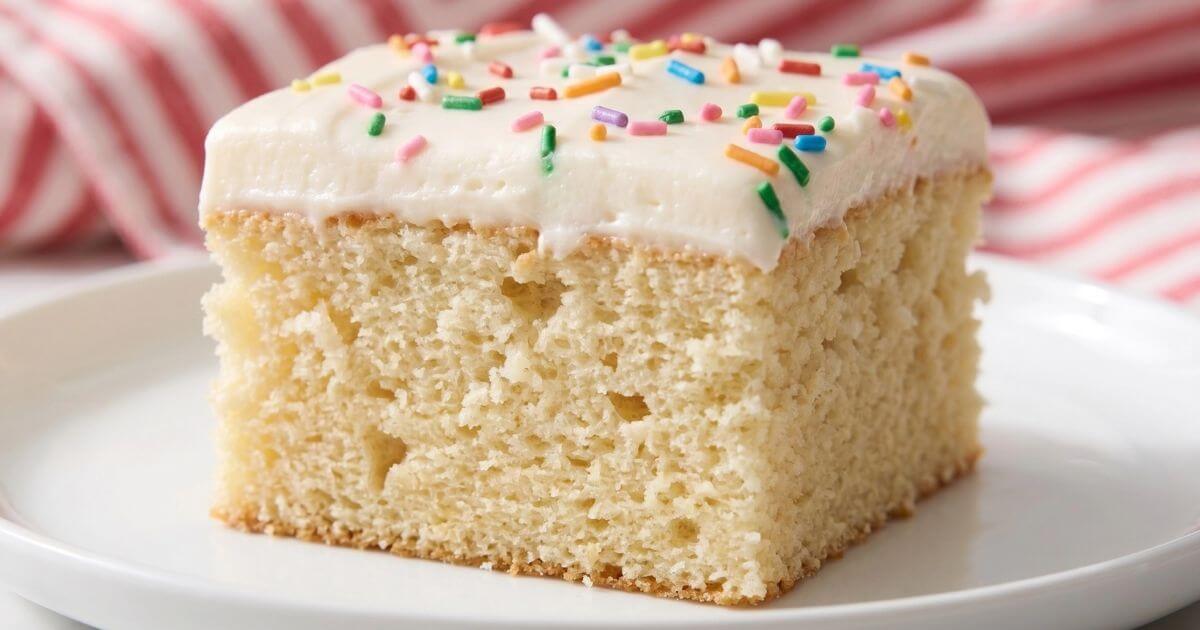
Best Vanilla Sheet Cake With Fluffy Buttercream Frosting
There’s something about a vanilla sheet cake that just hits different. Not a towering layer cake with fondant roses you’re scared to cut. Not a cupcake you have to juggle on a paper plate. Just a big, honest, buttery slab of cake sitting right there in the pan frosted thick, ready to feed everyone at the table.
I’ve been making this cake since my grandmother pressed the recipe card into my hands at sixteen. She called it her “crowd cake.” You know the kind the one that shows up at every birthday, potluck, and Sunday after church. In the American South, sheet cakes are practically their own love language. And honestly? After making this vanilla sheet cake more times than I can count, I get it.
It’s the kind of recipe that sounds almost too simple. Which is exactly why I got it wrong the first two times.
But we’ll get to that.
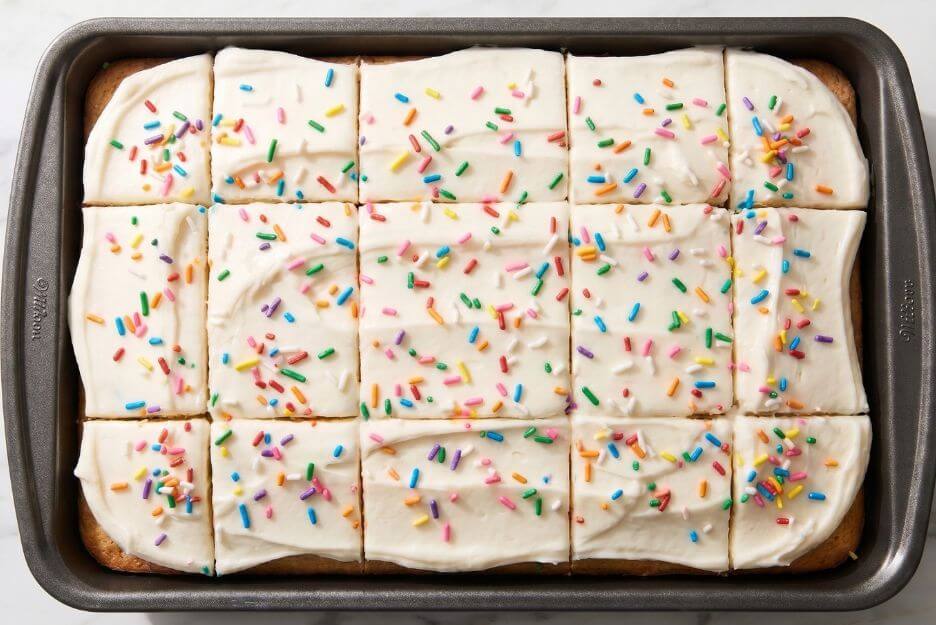
Table of Contents
Why you’ll love this Vanilla Sheet Cake
- One pan, zero fuss, feeds a crowd
- Stays moist for days (genuinely)
- The buttercream is light, not the kind that glues your teeth together
- No stand mixer required a hand mixer works perfectly
- Budget-friendly ingredients you already have
Total Time Breakdown
- Total Time: 1 hour 50 minutes
- Prep Time: 20 minutes
- Cook Time: 25-30 minutes
- Cooling Time: 1 hour
Vanilla Sheet Cake Ingredients
For the Cake
- 2½ cups (315g) all-purpose flour (or cake flour for a softer crumb more on that below)
- 2½ tsp baking powder
- ½ tsp baking soda
- ½ tsp fine salt
- 1 cup (225g) unsalted butter, softened to room temperature
- 1¾ cups (350g) granulated sugar
- 4 large eggs, room temperature
- 1 tbsp pure vanilla extract (yes, a whole tablespoon don’t hold back)
- 1 cup (240ml) full-fat sour cream
- ½ cup (120ml) whole milk
For the Fluffy Buttercream Frosting
- 1½ cups (340g) unsalted butter, softened
- 4 cups (480g) powdered sugar, sifted
- 3–4 tbsp heavy whipping cream
- 2 tsp pure vanilla extract
- Pinch of salt
Optional
- rainbow sprinkles
Ingredient Notes & Substitutions
Butter: Use real unsalted butter. Margarine will make it taste flat, and I say that from personal experience.
Sour cream: Full-fat is the move. It’s what keeps the cake tender and moist for days. In a pinch, full-fat Greek yogurt works almost as well.
Milk: Whole milk gives you the richest result. Oat milk or 2% will work if needed, but the crumb won’t be quite as soft.
Flour: All-purpose flour is totally fine and what most people have. Cake flour gives you a slightly more delicate crumb if you want that extra softness, it’s worth the swap. Just use the same amount.
Dairy-free? Vegan butter (the stick kind, not the spreadable tub) and coconut cream can stand in for butter and sour cream respectively. The cake won’t be identical, but it’ll still be really good.
Equipment You’ll Need
- 9×13 inch baking pan this is the classic sheet cake size. Use metal over glass if you can; it bakes more evenly.
- Hand mixer or stand mixer
- Two large mixing bowls
- Rubber spatula
- Offset spatula for frosting (a butter knife works, it just takes longer)
- Wire cooling rack
- Measuring cups and spoons
No offset spatula? An old butter knife dragged across the surface actually creates those nice swoops in the frosting. Totally intentional-looking. Tell everyone you did it on purpose.
Step-by-Step Instructions
1. Preheat your oven to 350°F (175°C). Grease your 9×13 pan generously with butter or nonstick spray, then line the bottom with parchment paper. This is the move that saves you when you’re trying to lift a fully frosted cake.
2. Whisk together your dry ingredients. In a medium bowl, combine the flour, baking powder, baking soda, and salt. Whisk it for a full 30 seconds this is basically sifting, and it matters for an even, soft vanilla sheet cake.
3. Beat the butter and sugar until light and fluffy. This takes about 4–5 minutes on medium-high speed. Don’t rush it. The mixture should go from yellow and grainy to almost white and cloud-like. This is where the fluffiness lives. I used to skip this step and wonder why my cake was dense. Now I set a timer.
4. Add the eggs one at a time. Beat well after each one. Add the vanilla extract with the last egg. If your eggs are cold, the batter may look slightly curdled keep going, it’ll come back together.
5. Mix in the sour cream. Just until combined. Your batter will thicken up noticeably here, which is exactly what you want.
6. Alternate adding the flour mixture and milk. Start and end with flour: flour → milk → flour → milk → flour. Mix on low speed and stop as soon as it comes together. Overmixing is the number one way to get a tough, rubbery easy vanilla sheet cake, and I learned that the hard way during my sister’s baby shower. The cake looked perfect. The texture was basically bread.
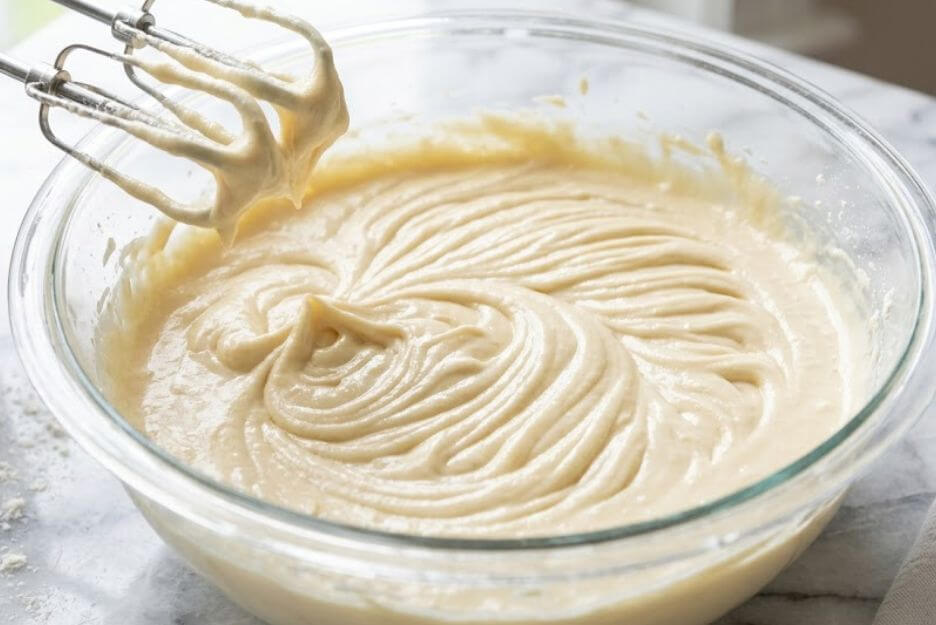
7. Pour the batter into your prepared pan. Spread it into the corners with your spatula the batter is thick, so it needs a little convincing. Tap the pan on the counter two or three times to release any air bubbles.
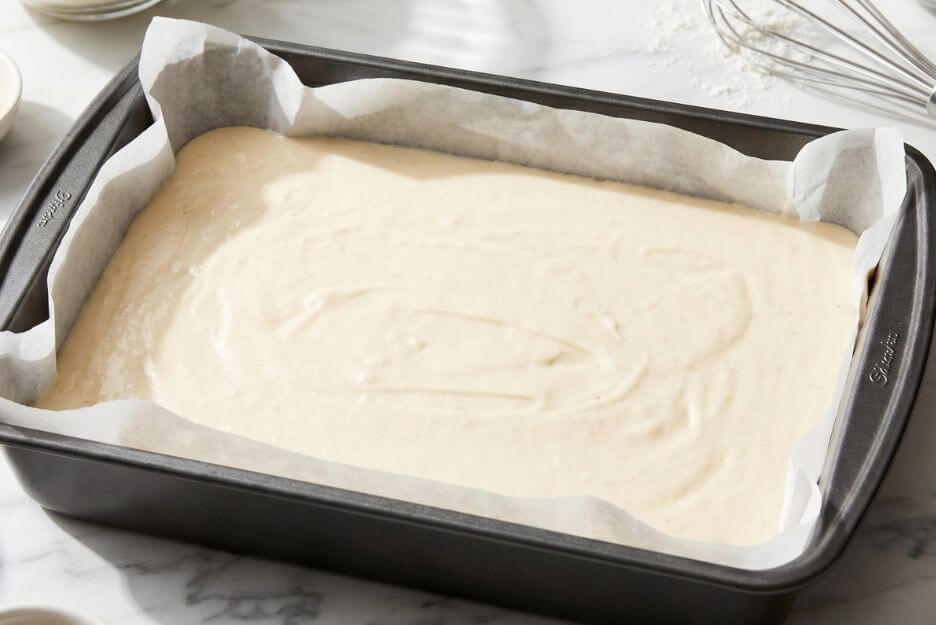
8. Bake for 30–35 minutes. Start checking at 28 minutes. A toothpick inserted in the center should come out with just a few moist crumbs not wet batter, not bone dry. The edges will pull slightly from the sides of the pan.
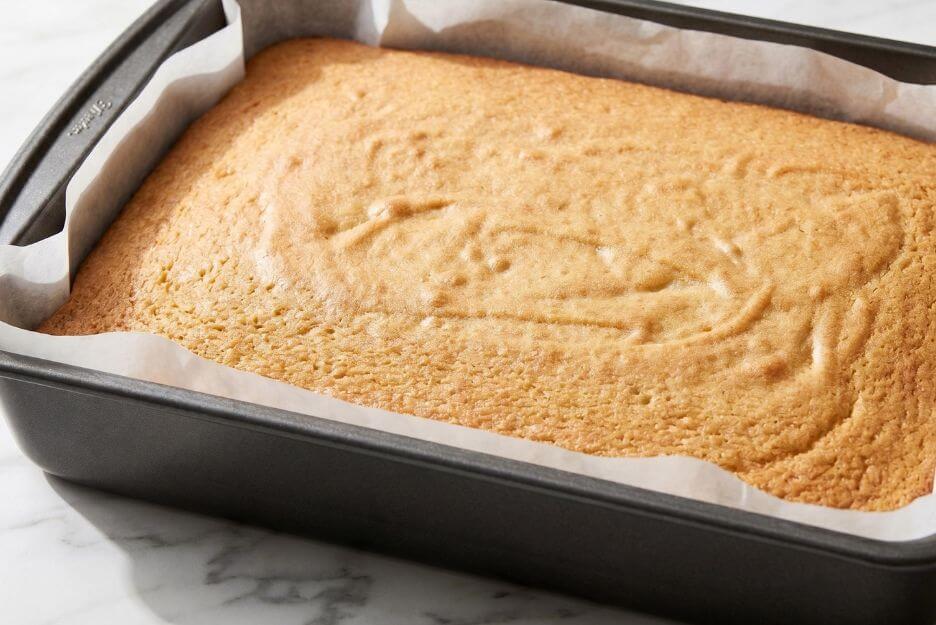
9. Cool completely before frosting. I mean completely. Cool the cake in the pan for 20 minutes, then transfer to a wire rack for another 30–40 minutes.
10. Make the buttercream. Beat the softened butter alone for 2 full minutes until it’s pale and creamy. Add powdered sugar one cup at a time, mixing on low. Add vanilla and salt. Then add heavy cream one tablespoon at a time until you hit a consistency that’s spreadable but holds a swirl. Taste it. Adjust. Add more cream if it’s too stiff, more powdered sugar if it’s too loose.
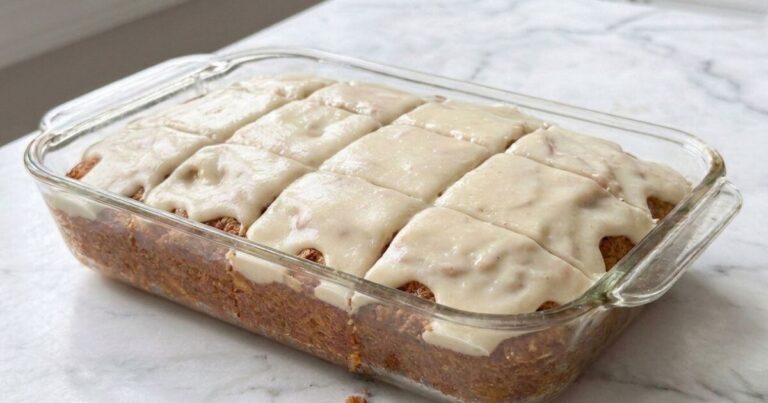
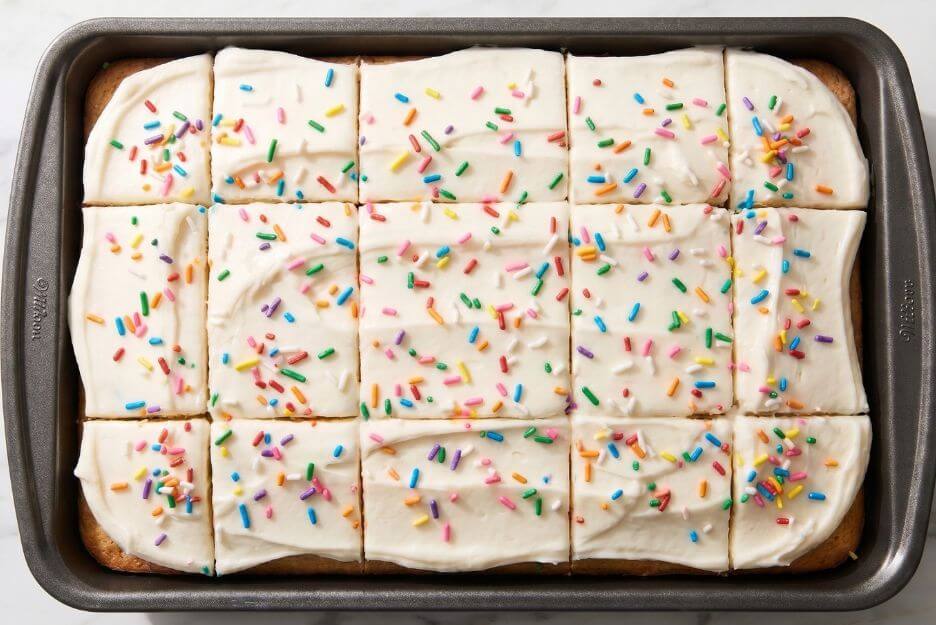
11. Frost and serve. Spread the buttercream over the cooled cake in big, generous swoops. Don’t be shy this is a sheet cake, not a wedding tier. Sprinkles are optional but deeply encouraged.
Expert Tips & Variations
Room temperature really matters. Cold butter won’t cream properly. Cold eggs can curdle the batter. Pull everything out of the fridge 45 minutes before you start.
The sour cream is non-negotiable for moisture. This is what separates a fluffy vanilla sheet cake recipe that stays good for three days from one that dries out by tomorrow morning. Don’t skip it, don’t reduce it.
Want more vanilla flavor? Add a teaspoon of vanilla bean paste alongside the extract. Those little flecks look gorgeous and the flavor is noticeably richer.
For a birthday cake version: Add rainbow sprinkles directly into the batter (about ¼ cup) before pouring into the pan. Instant confetti cake. My daughter requests this every single year.
Chocolate version: Swap ½ cup of flour for ½ cup of good cocoa powder. Keep everything else the same. It becomes a completely different cake in the best way.
Lemon variation: Replace the vanilla extract with 1 tbsp lemon extract and add the zest of two lemons to the batter. Top with lemon buttercream instead. Incredible for spring gatherings.
Storage & Freezing
At room temperature: Cover the pan tightly with plastic wrap or transfer slices to an airtight container. Stays soft and moist for up to 3 days. The sour cream in the batter is doing a lot of work here.
In the refrigerator: Up to 5 days covered. Bring slices to room temperature before eating cold cake is denser and the buttercream gets hard.
Freezing the unfrosted cake: Wrap the fully cooled cake tightly in a double layer of plastic wrap, then a layer of aluminum foil. Label it. Freeze for up to one month. Thaw overnight in the refrigerator, then bring to room temperature before frosting.
Freezing frosted slices: Individually wrap each slice in plastic wrap, then place them in a zip-top freezer bag. They freeze beautifully for up to 3 weeks. Pull one out when you need a slice and let it thaw on the counter for about an hour.
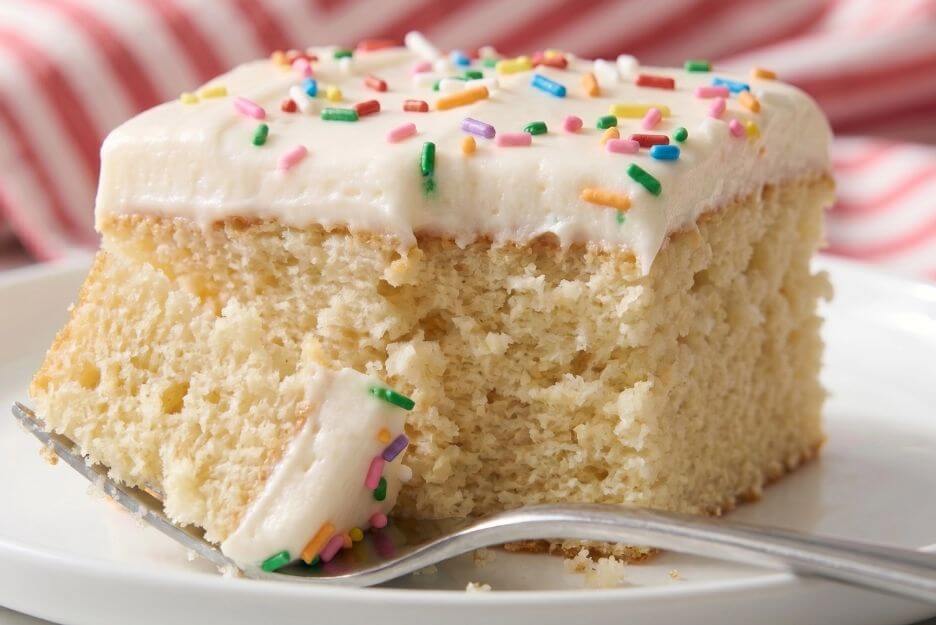
Serving Suggestions
Fresh berries on top strawberries, raspberries, or blueberries scattered across the frosted cake right before serving. It makes a simple cake look like you tried harder than you did.
A scoop of vanilla ice cream alongside a slice. The warm-cold contrast, even with a room-temperature cake, is genuinely good.
Coffee or chai the buttercream’s sweetness plays really well against something slightly bitter or spiced. My personal favorite pairing.
For kids: Serve with a small cup of warm chocolate milk. They’ll lose their minds.
For a party presentation: Pipe rosettes around the edges using a large star tip, then fill the center with a simple swooped frosting. Add sprinkles, fresh flowers, or even a dusting of freeze-dried berry powder. Takes ten extra minutes and looks like a bakery made it.
Frequently Asked Questions
How do I keep vanilla sheet cake moist for days? The sour cream in the batter is your best friend here. Beyond the recipe itself, store the cake tightly covered at room temperature not in the fridge, which dries it out faster. If you’re making it ahead, frost it the day you plan to serve it and keep it covered until then.
Can I use a box cake mix instead of making it from scratch? Yes, and there’s zero shame in it. Use a vanilla or white cake mix and replace the water with whole milk, add an extra egg, and stir in ½ cup of sour cream. The result is noticeably better than following the box directions, and it’s still fast. Vanilla bean paste instead of the extract the box calls for makes a real difference too.
What pan size works best for vanilla sheet cake? A 9×13 inch metal pan is the standard for good reason it bakes evenly and slices into clean portions. A 10×15 jelly roll pan also works if you want thinner slices for a larger crowd; just reduce baking time by about 8–10 minutes and watch it closely.
Can I substitute cake flour with all-purpose or self-raising flour? All-purpose flour works great that’s what this recipe uses. Cake flour gives you a slightly softer, more delicate crumb, so it’s a nice upgrade if you have it. For self-raising flour, omit the baking powder and reduce the salt to about ¼ tsp. The rise won’t be quite as controlled, so results can vary. Stick with all-purpose or cake flour if you can.
How much buttercream frosting does a sheet cake need? This recipe makes enough to cover a 9×13 generously you’ll have a thick, swooped layer with maybe a little left over. If you like a thinner coating, you can halve the frosting recipe. If you want tall, dramatic swirls, make 1.5x the batch. Honestly, I’ve never heard anyone complain that a cake had too much buttercream.
How do you freeze vanilla sheet cake properly? Freeze it unfrosted for best results. Wrap the fully cooled cake in two layers of plastic wrap, then wrap that in aluminum foil to block freezer smells and prevent ice crystals. It keeps well for up to one month. Thaw overnight in the refrigerator, then bring to room temperature before frosting and serving.
How do I wrap the cake to prevent freezer burn? The double wrap is what does it: plastic wrap directly against the surface of the cake to seal out air, then foil as an outer protective layer. If you’re freezing individual slices, wrap each one in plastic wrap and place them in a labeled zip-top bag. Squeeze out as much air as possible before sealing. Use within three to four weeks for the best flavor and texture.
Love vanilla? Try these other delicious vanilla cake recipes:
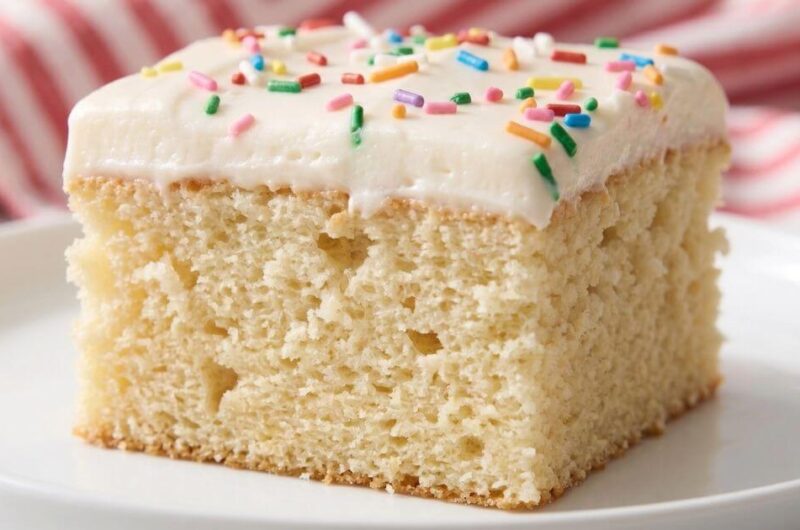
Best Vanilla Sheet Cake With Fluffy Buttercream Frosting
Course: Cakes18
servings20
minutes30
minutes380
kcalVanilla sheet cake made from scratch with a light, fluffy buttercream frosting. Simple ingredients, one pan, and perfect for any celebration.
Ingredients
- For the Cake
(315g) all-purpose flour
2½ tsp baking powder
½ tsp baking soda
½ tsp fine salt
(225g) unsalted butter, softened to room temperature
(350g) granulated sugar
4 large eggs, room temperature
1 tbsp pure vanilla extract
(240ml) full-fat sour cream
(120ml) whole milk
- For the Fluffy Buttercream Frosting
(340g) unsalted butter, softened
(480g) powdered sugar, sifted
3–4 tbsp heavy whipping cream
2 tsp pure vanilla extract
Pinch of salt
- Optional
1/4 cup rainbow sprinkles
Instructions
- Prep: Preheat oven to 350°F (175°C). Grease a 9×13 pan and line the bottom with parchment paper.
- Dry Ingredients: Whisk flour, baking powder, baking soda, and salt in a medium bowl.
- Cream: Beat butter and sugar on medium-high for 4–5 minutes until pale and fluffy.
- Eggs: Add eggs one at a time, beating well after each. Mix in the vanilla extract with the last egg.
- Sour Cream: Mix in the sour cream just until combined.
- Combine: Alternate adding the flour mixture and milk on low speed, starting and ending with flour (3 additions of flour, 2 of milk). Mix just until combined; do not overmix.
- Pan: Pour batter into the pan, spread to the corners, and tap the pan on the counter to release air bubbles.
- Bake: Bake for 30–35 minutes. A toothpick inserted in the center should come out with a few moist crumbs.
- Cool: Cool in the pan for 20 minutes, then transfer to a wire rack to cool completely.
- Buttercream: Beat softened butter for 2 minutes until creamy. Alternately mix in powdered sugar (one cup at a time), vanilla, salt, and heavy cream (one tablespoon at a time) until smooth and spreadable.
- Frost: Spread buttercream over the cooled cake and add sprinkles if desired.